The Channel Matrix: Matching Your Message to the Right Medium
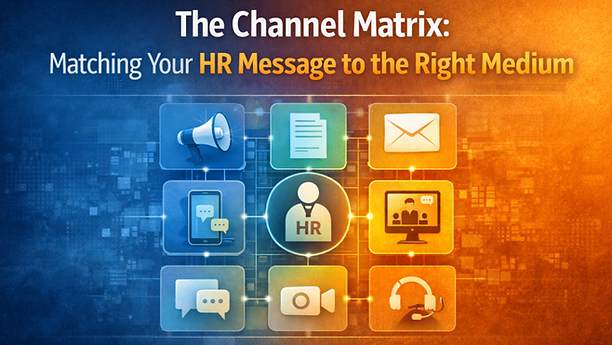
Last month, I watched an HR team pour their hearts into a beautifully crafted benefits announcement. The content was clear, the design was polished, and the value proposition was compelling. They sent it out via email on a Friday afternoon. By Monday, inbox zero had claimed another victim. Adoption remained stubbornly low. Managers were fielding the same questions repeatedly. The team was baffled—"We communicated it!"
They had. But to the wrong channel at the wrong time for the wrong audience. Here's what I've learned about choosing communication channels that actually reach employees where they are.
The Channel Selection Mistake Most HR Teams Make
We default to what's easiest for us, not what's most effective for our audience. Email is convenient. Intranet posts are simple to publish. All-hands meetings reach everyone at once.
But strategic channel selection starts with three questions:
Who needs this information? (Audience segmentation)
What action do we need them to take? (Behavioral objective)
Where are they most receptive? (Channel preference and context)
The answers should drive your channel strategy, not the other way around.
Matching Channels to Communication Goals
Different objectives require different approaches. Here's how I think about the channel mix:
For Awareness and Reach
Email remains powerful when used strategically. Send early in the week, or late on a Sunday night so messaging is at the top on Monday morning. Use compelling subject lines, and keep the content scannable. For benefits announcements, I've seen personalized email journeys based on employee life stage dramatically outperform one-size-fits-all blasts.
Signage and posters work effectively for frontline employees who don't live in email. One manufacturing client saw 3x higher awareness of their new safety policy by putting QR codes on posters near time clocks versus relying solely on email.
Slack or Teams channels excel at building sustained visibility. The key: dedicated channels for specific initiatives like a hybrid work transition or parental leave community will generate engagement. Burying announcements in overloaded general channels guarantees they will be missed.
For Understanding and Education
Interactive webinars and town halls allow real-time Q&A and create space for nuanced discussion. For complex changes like compensation philosophy shifts, nothing replaces the ability to ask "but what does this mean for ME?"
Short video content (2-3 minutes max) increases information retention and can be watched on employees' own time. When launching a new HRIS system, tutorial videos showing actual workflows are worth a thousand written instructions.
Benefits fairs and roadshows bring the conversation to employees. Interactive demos let people explore privately and ask questions they might not raise publicly. For sensitive topics like mental health benefits or financial wellness programs, this privacy matters enormously.
For Engagement and Action
Manager cascade sessions are your secret weapon. Managers translate corporate messaging into team-specific context. Equip them with talking points, FAQs, and conversation starters—then let them facilitate the discussion that matters most.
Dedicated landing pages or microsites serve as single sources of truth. Include FAQs, calculators, resources, and feedback mechanisms. For our parental leave enhancement, the landing page became the hub that every other channel pointed toward.
Peer communities (Slack groups, ERGs, cohort programs) create ongoing dialogue and social proof. When employees see colleagues successfully navigating a change, belief becomes contagious.
For Feedback and Iteration
Pulse surveys give you rapid directional data on awareness, understanding, and sentiment. Don't wait until the end of a campaign to measure—check in at key milestones.
Office hours and AMAs signal accessibility and create safe spaces for harder questions. When rolling out significant policy changes, weekly drop-in sessions showed we were listening, not just broadcasting.
Anonymous feedback tools surface concerns people won't raise publicly. Some of the most valuable insights come from what employees are afraid to say out loud.
Segmentation: The Game-Changer
The biggest leap in communication effectiveness comes from audience segmentation. Not everyone needs the same information through the same channel.
Frontline vs. corporate employees: Factory workers may not check email daily but gather at shift changes. Remote workers live in digital channels but miss physical signage. Tailor accordingly.
Early adopters vs. skeptics: Champions want deep-dive sessions and opportunities to provide feedback. Skeptics need social proof and clear "what's in it for me" messaging. Different channels, different framing.
Managers vs. individual contributors: Managers need information earlier, with more context and enablement tools. ICs need it when it's actionable for them.
Life stage and role: New parents care about parental leave. Employees approaching retirement focus on 401(k) changes. Benefits communication should reflect these realities through targeted channels.
The Multi-Channel Campaign Framework
For major initiatives, try using a layered approach:
Week 1 - Leadership Preview
Executive email from CEO/CHRO
Manager enablement session with toolkit
Intranet teaser with "more coming soon"
Week 2 - Launch
All-hands announcement with live Q&A
Personalized emails to segmented audiences
Landing page goes live
Physical posters in high-traffic areas
Weeks 3-6 - Education Phase
Weekly themed emails with specific use cases
Video tutorials and walkthroughs
Benefits roadshows or webinar series
Manager team meeting discussion guides
Peer success stories on Slack/Teams
Ongoing - Sustainment
Monthly newsletter features
Integration into onboarding
Refreshed content at key moments (open enrollment, annual reviews)
Community channels for peer support
Channel Selection Red Flags
Watch out for these warning signs:
Using only one channel for critical information - redundancy builds retention
Choosing channels that work for corporate but not frontline - meet people where they are
Sending everything via email - you're training people to ignore you
No follow-up or reinforcement - one-and-done rarely works for behavior change
Not testing channels with small groups first - pilot and iterate
The Channel Audit Exercise
If you're unsure which channels are actually working, try this:
List your last 3 major HR communications
Note which channels you used for each
Measure awareness, understanding, and action for each initiative
Map which channels correlated with better outcomes
Survey employees about their preferred channels by topic
The patterns will reveal themselves. You might be surprised.
Start With Your Audience
At the end of the day, channel selection isn't about what's easiest for HR—it's about what's most effective for employees. Before planning your next campaign, spend time understanding where your different employee populations actually spend their attention. Ask them directly. Watch their behavior. Test and learn. Remember that the right channel isn't the one that is easiest. It is the one that reaches your people where they are, when they're ready to listen, in a format that drives the action you need.
What communication channels have surprised you with their effectiveness? I'd love to hear what's working in your organizations.


Comments